Kyoto: temples, gardens and old Japan
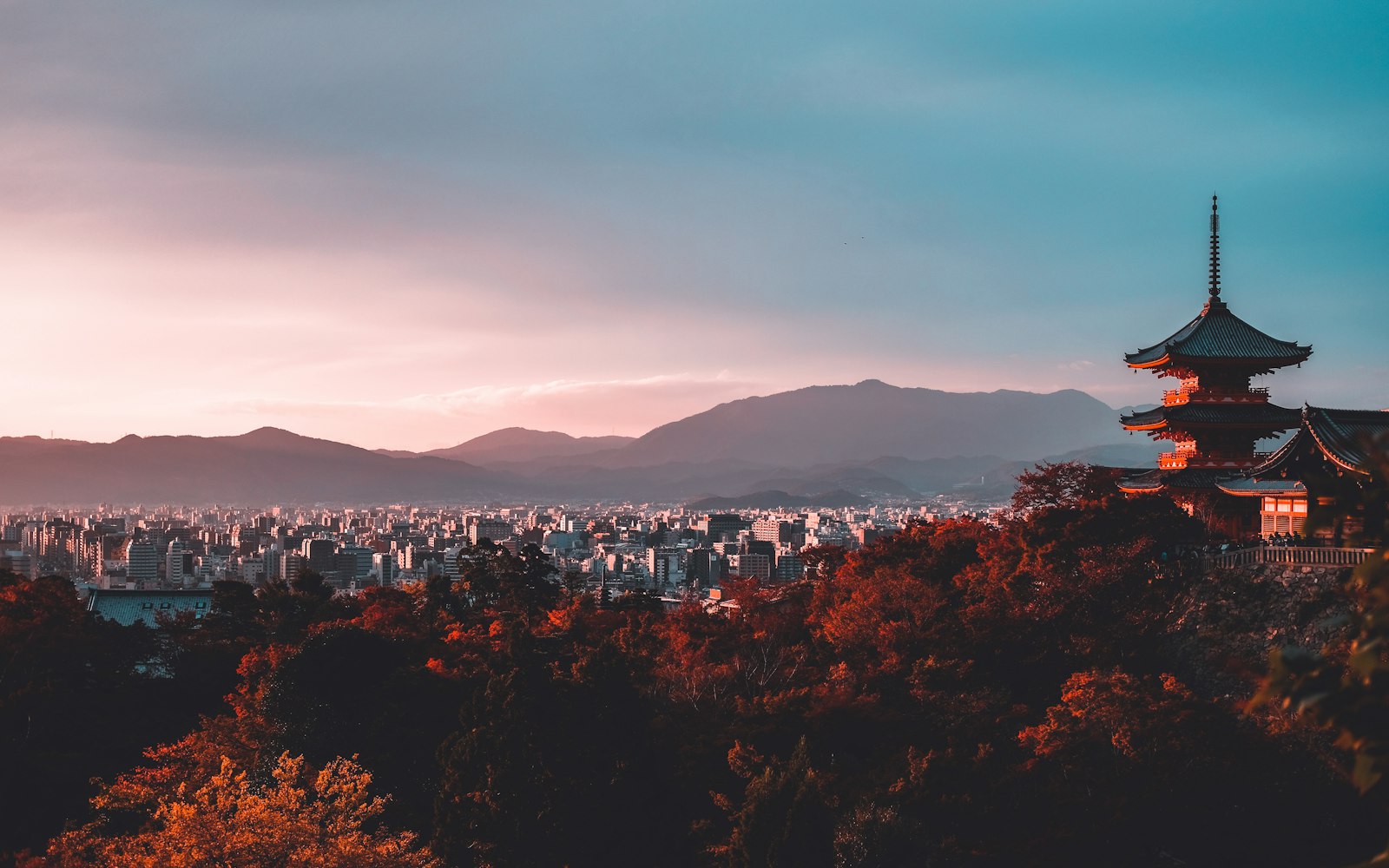
Kyoto is Japan’s soul — a thousand temples, raked-gravel gardens, geisha streets and bamboo groves, wrapped in centuries of quiet ceremony. It rewards a slow week, but even three or four days leaves a deep impression.
When to go
Spring (cherry blossoms, late March–early April) and autumn (fiery maples, November) are spectacular but crowded — and worth it. Summer is hot and humid; winter is crisp and serene.
Getting around
Kyoto is best by bus and bicycle, with trains and subway for longer hops — an ICOCA card covers it all. The temples are spread out, so plan by area and start early to beat the crowds.
🛏️ Where to stay in Kyoto
Gion/Higashiyama brings traditional charm near the temples, downtown (Kawaramachi) is best for dining, and near Kyoto Station is easiest for transit. Splurge on a ryokan for a night.
Amble may earn a commission from bookings made through these links, at no extra cost to you. Learn more.
Three perfect days
Day 1 — Eastern Higashiyama
Kiyomizu-dera’s wooden terrace, then the preserved lanes of Ninenzaka and Sannenzaka, ending in Gion — the geisha district — at dusk.
Day 2 — Arashiyama & gold
The famous bamboo grove and Tenryū-ji garden in the west, then the dazzling golden pavilion of Kinkaku-ji.
Day 3 — A thousand gates
Fushimi Inari’s endless vermilion torii at sunrise (go early!), then the Zen calm of the Philosopher’s Path and Ginkaku-ji.
🎫 Tours & experiences
A tea ceremony, a kimono rental, a guided Gion evening walk, or a day trip to Nara’s deer and Great Buddha.
Amble may earn a commission from bookings made through these links, at no extra cost to you. Learn more.